Committee queries inconsistency in timing, alleged plane discovery

When Samuel Christy Lwara faced the Parliamentary Ad-hoc Committee investigating the June 10 2024 military plane crash, he claimed to be the discoverer of the crash site, but later disowned his own evidence.
Upon concluding his testimony in Lilongwe, committee members highlighted discrepancies in the timing of events, missing photographs and claims of overseas laboratory analysis.
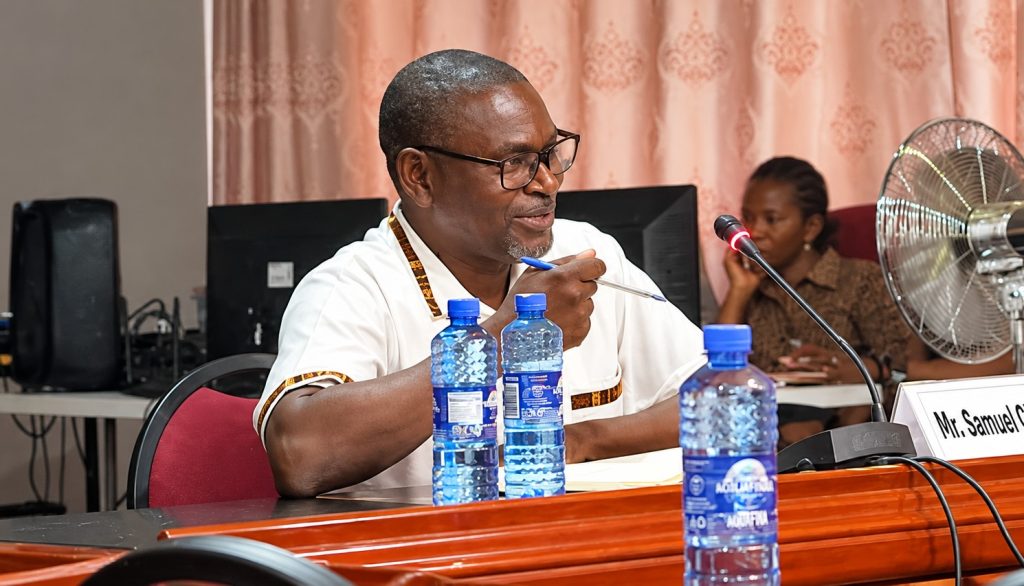
Lwara, who identified himself as an independent UTM Party campaigner, faced a barrage of questions following his account of events at Kasangazi, eventually withdrawing his claim that he was the first person to reach the crash site.
The witness claimed to have taken photographs at the scene and information he claimed to have obtained from laboratories in Canada and Germany.
Pressed by Dedza Kasina member of Parliament (MP) Joshua Malango (Malawi Congress Party-MCP) to clarify whether he was the first person at the crash site, Lwara initially responded: “Let us not dwell much on that.”
But he later said “no” following repeated questioning of his testimony.
Lwara told the inquiry that he took photographs of the wreckage of the Malawi Defence Force (MDF) Dornier aircraft between 8.10am and 8.30am on June 11 2024.
But committee members cited findings from previous inquiries that indicated that the crash site was discovered between 10.30am and 11am on the day.
The committee also questioned Lwara about the mobile phone he claimed to have used to take the photographs.
Dedza Mayani MP Savel Kafwafwa (MCP) asked him to identify the phone feature he allegedly used to detect a fire at Kasangazi.
However, the witness could not explain the feature, telling the committee instead that all the phones he owned were given to him as gifts.
Lwara further claimed that the photographs he took from the crash site disappeared from his phone after security officers confiscated it.
He said his phone was taken at around 10.20am.
Lwara also identified a National Intelligence Service officer, whom he named as Mr Chiguya, as the person who contacted him seeking the photographs.
Questions also arose about Lwara’s claims that debris from the crash had been sent abroad for laboratory analysis.
He initially told the committee that he sent the material through a courier for examination at laboratories in Canada and Germany, using a friend he identified as Mr Robertson.
But in response to questions to back his claim, he acknowledged that he did not receive feedback from the laboratories and described his earlier assertions as “assumptions”.
His testimony provided no formal laboratory findings to substantiate that part of his account.
Lwara further claimed that former MDF Commander General Vincent Nundwe (retired) told him that the Dornier aircraft involved in the crash was an outdated model without a black box.
He also said he had communicated with Newton Kambala during the search operation. But none of the accounts were independently corroborated in the proceedings described.
The German Federal Bureau of Aircraft Accident Investigation (BFU) final report attributed the military plane crash to adverse weather and human error while subsequent inquiries, including one appointed by then president Lazarus Chakwera ruled out foul play and recommended examination of safety protocols.
Chilima died alongside former first lady Patricia Dzimbiri who worked in his office, medical officer Dan Kanyemba, guard commander Lucas Kapheni, co-pilot Major Flora Selemani, pilot-in-command Colonel Owen Sambalopa, aide-de-camp Chisomo Chimaneni, Deputy Chief of Protocol Abdul Lapukeni and aircraft engineer Major Wales Aidin.